At the beginning of the text lies a different text. Interwoven into each sentence are sentences written by a different mind from a different time. The lines ooze with the ideas that inspired them. When the story of Lenù and Lila in Elena Ferrante’s My Brilliant Friend sets off, the two girls devour books from the school library. Louisa May Alcott’s Little Women is the text that prompts them to try and write their own story. What seems inconsequential at first is the starting point for the Neapolitan saga, spanning from the 1940s to the present time and becoming the reason why Lenù herself becomes a well-read author. At the beginning of her texts was a different text, published many years prior but more significant than ever. The four March sisters and their different characters, their growing up and their clashes, their competition and their love for each other all shape the portrayal of friendship that we encounter in Ferrante’s work and the work of her protagonist Lenù.
The question is, are there any books in the literary canon or the countless shelves of bookstores and libraries that are not intertextual, not interwoven and referential to each other? And is that a good or a bad thing? Is intertextuality just another word for creative laziness? Does it copy and paste the same old tropes and themes? Or does it enrich literature and art? Does it create new connections and therefore show the true human spirit of texts created by members of the human race? Is it the most empathetic part about reading?
When I studied English Literature at university, I encountered the term “intertextuality” for the first time. The OED defines the term as coming from literary theory, describing “the need for one text to be read in the light of its allusions to and differences from the content or structure of other texts”.[1] In short: intertextuality describes the allusive relationship and interconnectedness of literary texts. Soon enough I realised just how interconnected literary texts truly are. I don’t recall a single novel, short story, poem or play that did not include a single reference to another literary work. What do these references look like? They span from a simple mention of the other work, a quote, or a very subtle hint or stylistic similarity to a character or plot device that mirrors a work that has come before, to a complete reimagination of the novel, also known as a “spin-off”, in which the characters and their setting are revisited.
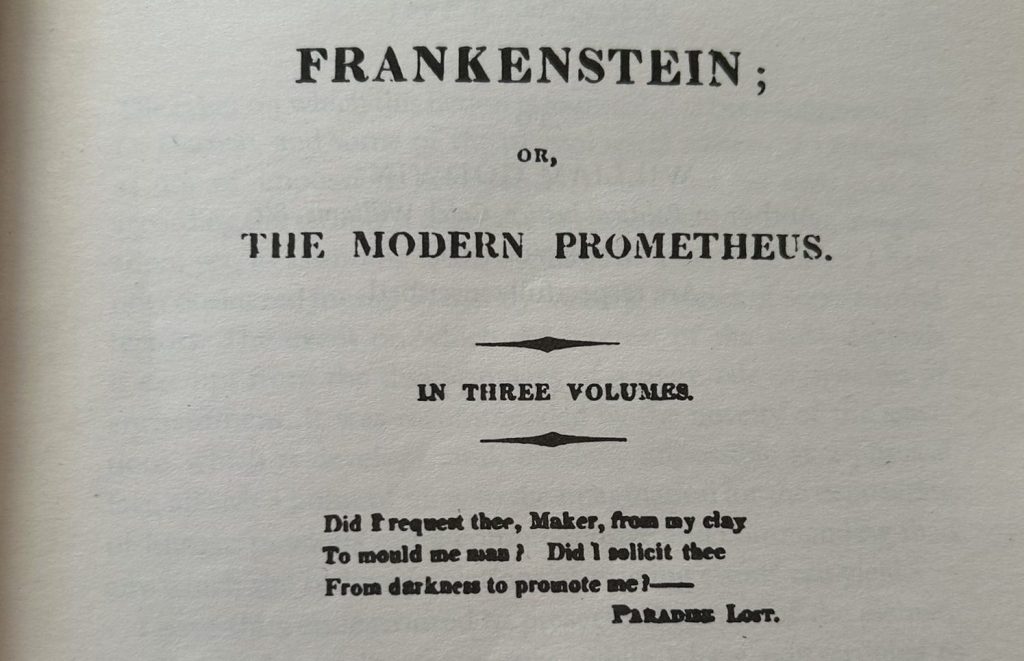
Some of the most famous examples of intertextuality in the English literature canon are Mary Shelley’s Frankenstein and James Joyce’s Ulysses. The title of Mary Shelley’s novel already hints at the intertextual reference it creates: Frankenstein or the Modern Prometheus. So, when Shelley wrote her world-famous Gothic novel in 1818, she linked Victor Frankenstein’s flawed and god-like ambition to create a man to the Greek myth of Prometheus, who put himself above the gods by stealing fire for humanity and ultimately facing severe punishment. James Joyce’s 1000-page epic novel Ulysses from 1922 traces the structure and characters of Homer’s Odyssey and reimagines the hero’s journey through 20th-century Dublin. In 1966, Jean Rhys wrote a postcolonial prequel, aka “spin-off”, to Charlotte Brontë’s Jane Eyre from 1847 by bringing the backstory of Rochester’s first wife, Bertha Mason, to life. The Disney classic The Lion King is an intertextual adaptation of Shakespeare’s most famous play, Hamlet, for example. The list is endless and spans across various forms of media. Books reference other books or poems, films reference other films or books or poems read by their protagonists, musical pieces reference literary works that inspired them, and vice versa; video games reference films and books, and the list goes on and on. An endless spiral of multimedia intertextuality.
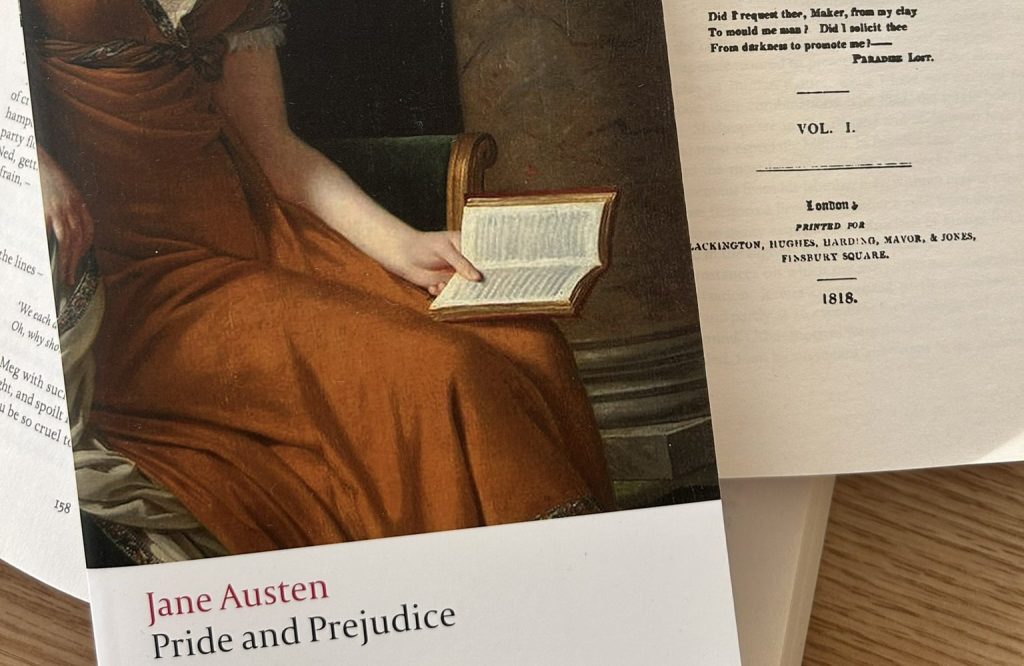
When we think of reinterpretations of texts, spin-offs or reinstatements of characters, settings, language or plot dynamics, intertextuality can go to new extremes. Just how many reinterpretations of Jane Austen’s most famous novel Pride and Prejudice do exist? How many books that take the original enemies-to-lovers dynamic of a proud and self-important Mr Darcy and a tenacious and demanding Elizabeth Bennett have we encountered so far? What if Mr Darcy and Lizzy Bennett had to go through their troubles and misunderstandings while also fighting in a zombie apocalypse? For anyone wondering what that would look like, the 2016 movie Pride and Prejudice and Zombies by Seth Grahame-Smith might come in handy. Is it blasphemous in the world of Austen to let the Bennett sisters fight off undead Regency lords and ladies? Or does this reimagination of the original text support it by bringing a new audience to the text? After all, through this reimagination, a social critique with romantic undertones is turned into an action-comedy horror film, and suddenly new fans might be rooting for a happy ending for Mr Darcy and Elizabeth Bennett.
When I think about these countless adaptations, I cannot help but wonder how many movies and mini-series are out there on the streaming sites that eviscerate us. There is a new adaptation of P&P coming out on Netflix in a few weeks, for which the millennial fairy godmother of modern-day dating and friendship, Dolly Alderton, reimagined the original text. She promised to give us something new, something we haven’t seen before, by writing the screenplay to a book we have indeed seen many, many times before. My favourite adaptation of Pride and Prejudice will always be the 2005 movie by Joe Wright. I have seen it hundreds of times, and I know the story by heart, but of course I will be watching. Critically. I am strangely defensive of texts that are very dear to me. What about reimaginations that place Elizabeth Bennett in the 21st century? Do the Bridget Jones Diary books and movies with Colin Firth as a modern-day London heartthrob lawyer Mr Darcy count? In my opinion, yes. Of course, Bridget Jones is more about eating ice cream on your couch and dating struggles of a 30-something woman working in publishing than familial and economic struggles of a Regency-period woman, but the similarities are there, and the fact that these parallels exist enriches the reinterpretation, in my opinion. Because Bridget Jones is about pride and social status and the way it interferes with our perception of possible dating partners too. And the fuckboys of Bridget Jones are just as bad as the fuckboys of Jane Austen, like Mr Wickham and Mr Willoughby of Sense and Sensibility. How enlightening to find out that they always did exist and Jane Austen was just as tired of them as we are nowadays. Only recently this year, the BBC has adapted the book The Other Bennett Sister into a mini-series which follows the fate of Elizabeth’s overlooked and underrated sister Mary, who barely features in the novel, nor in the many film adaptations. Janice Hadlow believed her story to be worth telling, and so she did. The book and especially the BBC adaptation with the charming Ella Bruccoleri have quickly become a new fan favourite. How wonderful that Hadlow decided to take Jane Austen’s overlooked Bennett sister and place her in her own imagining of the text, bringing a new perspective on the world of Jane Austen to life. Of course, reinterpretations like Bridget Jones, The Other Bennett Sister or even Pride and Prejudice and Zombies are not Jane Austen novels. But that is hardly the point.
As enriching and engaging as these reimaginations can be, one major point of criticism of intertextuality can be the lack of innovation and uniqueness that comes with it. As I mentioned earlier, Netflix is feeding us another Pride and Prejudice just before Christmas. That would make the…4th Jane Austen screen adaptation this year? That is only the ones I can think of at the top of my head. If I had to include the countless romance novels with the enemies-to-lovers and miscommunication trope, the numbers would be in the hundreds or thousands. The true problem with intertextuality is rooted in the late-stage capitalist era of book publishing we currently live in. Once a book goes viral on BookTok, the publishing world bombards us with 50+ new versions of the same book with similar tropes, similar plot devices, similar storylines, similar covers. Seeing the rising numbers in readership that have come with the rise of BookTok, etc. I’m having a hard time criticising this, but I am sceptical of the lack of individuality and newness we encounter as we browse bookshops. Interestingly, it seems like this counter-productive form of intertextuality is limited to genres like romance and fantasy novels. As a result, this discussion of the negative implications of intertextuality becomes a question of gender, age and class of its readership, since the audience of romance novels, for instance, is mostly made up of a young female readership. I don’t want to lose my point here. What is most important is the fact that intertextuality can have negative consequences, especially when the modern publishing world uses it to be extremely lazy and simply copy and paste what’s currently trendy and, at the same time, to make extreme profits from that. At least not on my account. The same old tropes and covers bore me, and I have noticed how I tend to pick up books which look unique and different or that have been published long before this madness started. Pro tip: go to libraries or independent, small bookshops with a more unique book selection on their shelves!
Another problematic side effect of intertextuality concerns the question of which texts are woven into new texts, and which are not. There tends to be a majority of Western, white, heteronormative texts that are favoured and canonically reinterpreted. Pride and Prejudice is everywhere again and again. What about less famous books by female authors? Books by POC authors, books from outside the Western canon? Why does Western literature mostly intertextualise its own texts? Can there be a more global and diverse form of intertextuality? The problem here is not the literary concept of intertextuality per se but the same old and more relevant than ever question of literary canons and the diversification of said canon. The idea of a more diverse approach to intertextuality excites me greatly. How wonderful it would be if Western canonical texts had more diverse texts worked into their sentences and structures. I can only dream of all the interesting new themes and literary forms a diversified and global approach to intertextuality could birth.
The question remains: Do we really need another reinterpretation of Pride and Prejudice? Or: How much intertextuality is enough? To answer simply and straight to the point: as long as there is an audience for it, they will give us new interpretations of the old texts. I do admit, I would have been fine if there hadn’t been another Pride and Prejudice movie adaptation stacked with Hollywood stars. I could have gone without it. But intertextuality is so much more than just endless movie adaptations and profitable spin-offs and retellings. What I love most about intertextuality is ultimately the humanness of it, the empathy that lies at the root of it all. After all, what does intertextuality tell us? It tells us that the author who wrote this text is not just a writer but a reader. They read just like us, and just like us, they are inspired and touched by what they read. So much that they want to incorporate what inspired and touched them into their own works. It made them who they are. It made them a writer. Without having read a great book first, they would never have started writing in the first place. At the start of it all, of all literature, there was one book. Was it the most ancient piece of literature in the world, the epic of Gilgamesh found on Mesopotamian clay tablets from 3500 BC? Was it the epic tales of Homer? Or the Bible? It does not really matter which story started it all. What matters is the fact that one story had the power to inspire an infinity of other stories. Have you ever read a sentence and a book and been struck by it, because you realise that someone sometime before you has felt just what you feel right now and maybe haven’t been able to put into words? But there it is, right in front of you. A shiver runs down your spine, a strangely warm and comforting one. For me, intertextuality and the fact that so many authors- what am I saying, all the authors interconnect their texts with texts that have come before is the highest form of empathy and interconnectedness of the literary experience. How wonderful it is to write and read and feel the same thing as the human beings who wrote and read and felt before us. How wonderful to remember these moments of interconnectedness by documenting them, preserving them for as long as we continue to feel, write and read.
What are your favourite examples of intertextuality? Let me know!
[1] Oxford English Dictionary, “intertextuality (n.),” December 2024, https://doi.org/10.1093/OED/1010763774.


